
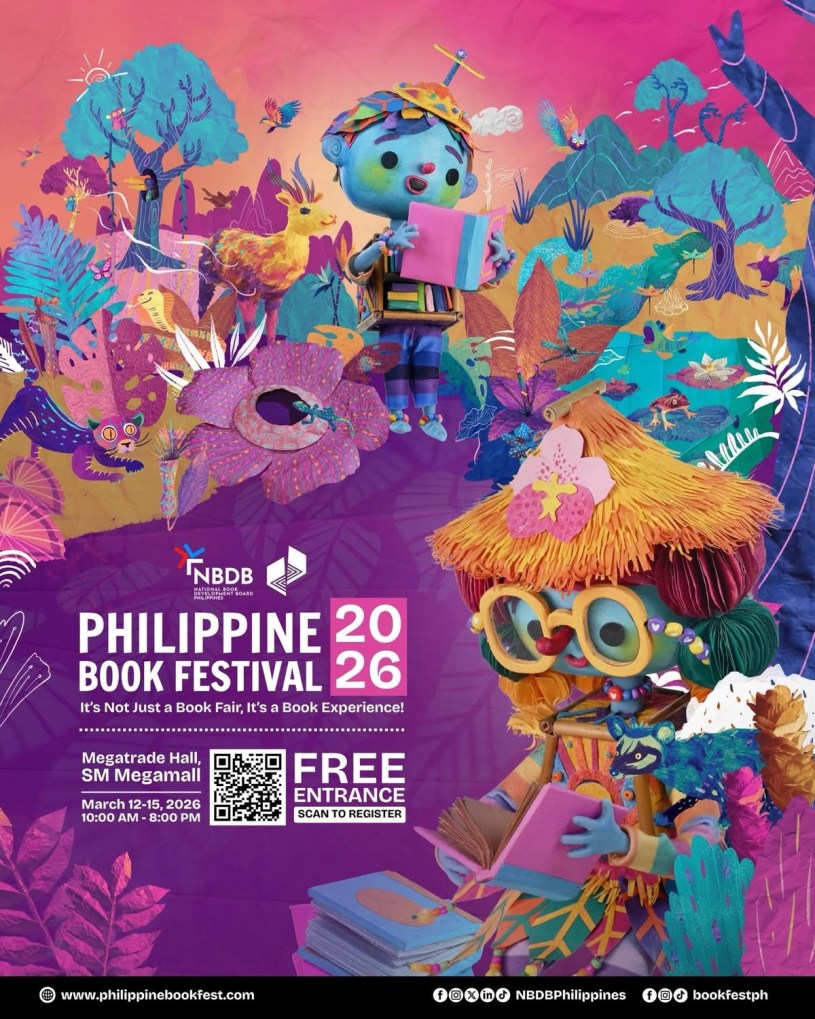
THE National Book Development Board (NBDB) formally opened the 4th edition of the Philippine Book Festival today, March 12, at the Megatrade Hall of SM Megamall in Mandaluyong City, marking the start of a four-day celebration of Filipino books, stories, and the industry that brings them to life.
NBDB Executive Director Charisse Aquino-Tugade led the opening ceremonies alongside Department of Education (DepEd) Secretary Edgardo “Sonny” Angara, before an audience of publishers, authors, illustrators, readers, educators, and industry stakeholders gathered to witness a milestone: for the first time in the festival’s history, opening day was fully open to the general public.
“This is also why the creative and cultural industries surrounding Filipino literature matter as much to this festival as the books themselves. The illustrators, the visual artists, the designers who shape how a book is seen before it is ever read—their presence here is not peripheral,” Aquino-Tugade said.
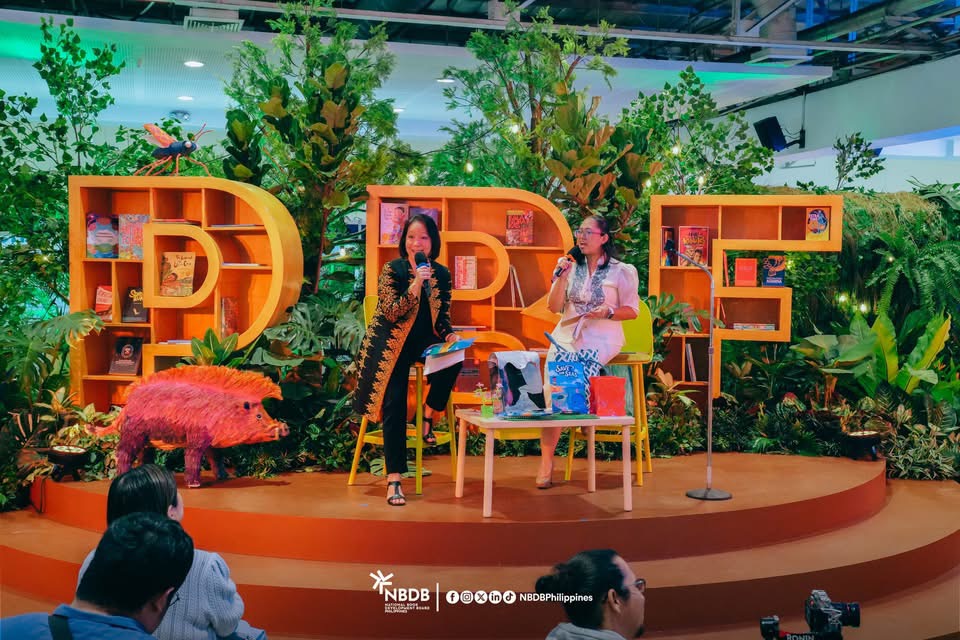
“A Filipino reader who has never thought of themselves as a reader is more likely to become one in a space that feels alive, that feels like it was made with some care and imagination, than in one that simply stocks titles. The argument the PBF keeps making, year after year, is that Filipino creative work deserves exactly that kind of space. Not a corner. Not a footnote. A room of its own, for a few days at a time, for as long as it takes for that to stop being something we have to fight for,” Aquino-Tugade added.
The presence of DepEd Secretary Angara at the opening underscored the festival’s role not only as a literary event but as a strategic platform for education. Day 1 brought together DepEd book evaluators, or “scopers,” from across the country, who used the PBF as an opportunity to review and identify locally produced titles for potential uses as Supplementary Learning Resources in public school classrooms and libraries.
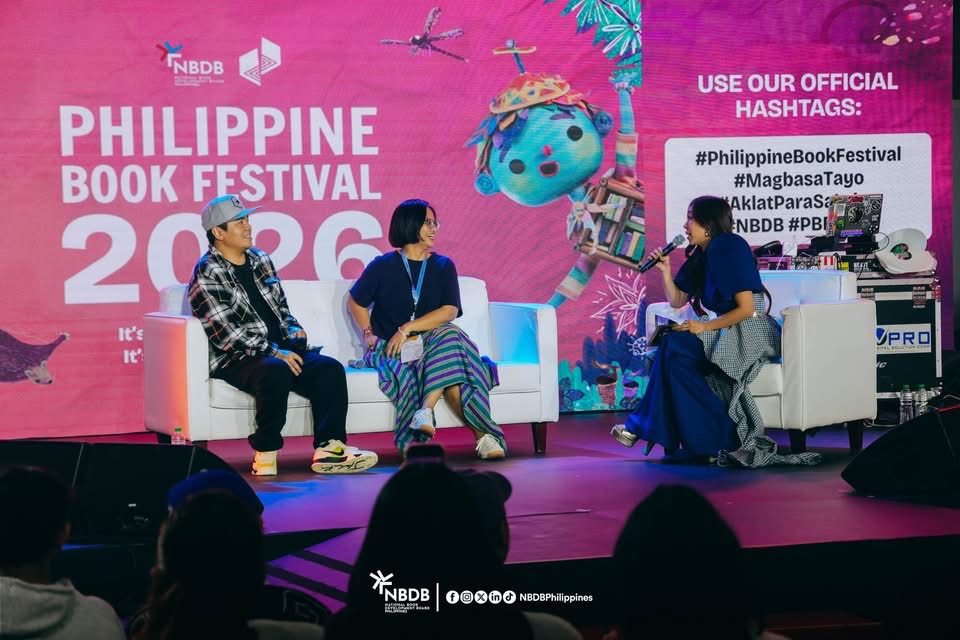
Four Realms, One Rainforest
PBF 2026 reimagined its four signature realms within a rainforest-inspired setting drawn from this year’s theme, Gubat ng Karunungan. Aral Aklat highlights books as tools for learning and discovery, featuring textbooks and teaching guides. Booktopia invites visitors to explore the breadth of Filipino fiction and nonfiction. Kid Lit nurtures early readers through interactive, child-friendly experiences. Komiks celebrates the visual richness of Filipino comics and graphic storytelling.
This year’s lineup brings together the full spectrum of Philippine literary life. National Artist for Film and Broadcast Arts Ricky Lee, National Artist for Literature Virgilio Almario, and prominent historian Ambeth Ocampo will be on hand for book signings alongside trade-book superstars Jonaxx and Ron Canimo, kidlit masters Eugene Evasco and Luis Gatmaitan, and komiks legends Manix Abrera and Pol Medina. GMA Network, together with PaperKat Books, will also launch Encantadia Chronicles: Sang’gre at PBF 2026.
Beyond the realms, five activation spaces gave the festival its distinctive character. Lugar Lagdaan serves as the hub for book signings and reader-author meetups. Bahay Ilustrador puts the craft of visual storytelling front and center. Gubat ng Karunungan hosts workshops, talks, and masterclasses. The Fiesta Stage anchors major programming and performances. Umpukan provides space for informal community conversations.
In cooperation with the National Library of the Philippines, the NBDB also features facsimiles of Jose Rizal’s Noli Me Tangere, Doctrina Christiana, and Fr. Manuel Blanco’s Flora de Filipinas—rare works that anchor the festival in the Philippines’ deep literary heritage.
A highlight of the four-day run is the 43rd National Book Awards (NBA), to be held on March 14 at the Fiesta Stage. The NBA acknowledges the works of authors, illustrators, editors, translators, and publishers whose books have helped shape the country’s literary landscape.
Into the Gubat ng Karunungan
This year’s festival gathers under the theme Gubat ng Karunungan, or Rainforest of Knowledge. The key visual, crafted by returning artist and designer Joffrey “Pepot” Atienza, follows two characters, Yaz and Ye-ey, as they journey through a teeming rainforest, taking in its flora, fauna, and falls. Drawing on his daily life at the foot of Mount Banahaw in Lucban, Quezon, Atienza wove recycled paper into the artwork as a deliberate gesture: the same trees that give us paper carry the stories we tell.
“Our stories, our books, and our karunungan all start here—in the biodiversity we need to protect,” he said.
A Festival Dedicated to Philippine Literature
For Aquino-Tugade, the festival’s significance runs deeper than the four days it occupies. “The Philippine Book Festival is positioned not only as a literary event but also as a third place that connects key players in the publishing and education sectors,” she said. “By convening publishers, institutional buyers, educators, and readers in a single venue, the festival supports broader efforts to improve access to quality Philippine books and sustain the local publishing industry. Let’s make the Philippines not just a nation of readers, but a global powerhouse of authors and creators,” Aquino-Tugade concluded.
 Pop Davao Philippines