
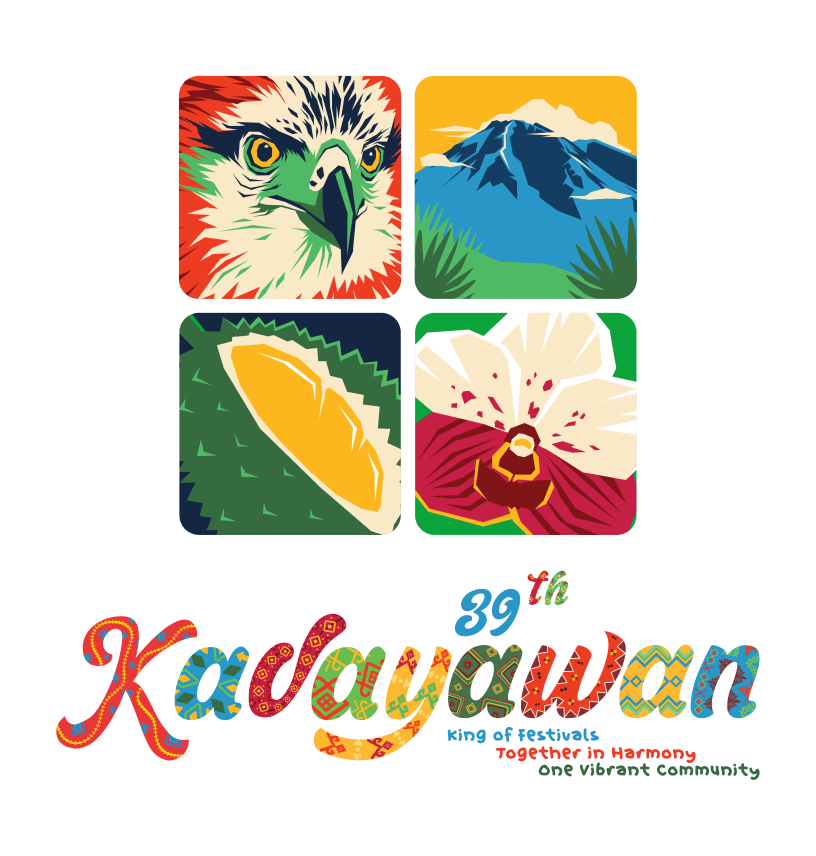
Davao City – The 39th Kadayawan Festival, a vibrant celebration held in Davao City, pays homage to its rich cultural tapestry and bountiful harvests. Originating in the 1970’s, under the initiative of Elias B. Lopez, a Bagobo leader and city mayor, the festival originally consisted of separate tribal celebrations of showcasing Indigenous and Muslim customs. These diverse rituals were consolidated into the Unlad Proyekto Davao program in 1986, later renamed Apo Duwaling, Symbolizing the city’s unity and cultural heritage.
The festival draws its name from significant elements: “Kadayawan” derived from the Mandaya word “madayaw,” meaning a warm greeting or goodwill. It honors Mount Apo, the highest peak in the Philippines, revered by the locals as a sacred ground. Additionally, it highlights two iconic symbols of Davao City: the durian, crowned as the king of fruits,” and the waling-waling orchid, known as the “queen of orchids.” The Philippines Eagle, names “PAG-ASA”, also represents the city’s ecological diversity and conservation efforts.
Under the leadership of former Mayor Rodrigo Duterte in 1988, Apo Duwaling was renamed ” Kadayawan sa Dabaw,” emphasizing Davao’s gratitude for its abundant harvests and diverse cultural roots. Mayor Duterte further institutionalized the festival in 1995 through Executive Order No.10, designating its celebration during August each year.
Today, Kadayawan Festival stands as one of the Philippines’ largest and most significant cultural events, uniting eleven Indigenous and Moro ethnic groups: Bagobo-Klata, Bagobo-Tagabawa, Matigsalug, Ata, Obu-Manuvu, Sama, Kagan, Maguindanaon, Iranun, Maranao and Raosug tribes. It continues to showcase Davao City’s cultural vibrancy, rich traditions, and spirit of thanksgiving, attracting visitors from around the world to experience its unique blend of festivities and cultural Heritage.
 Pop Davao Philippines